Overview
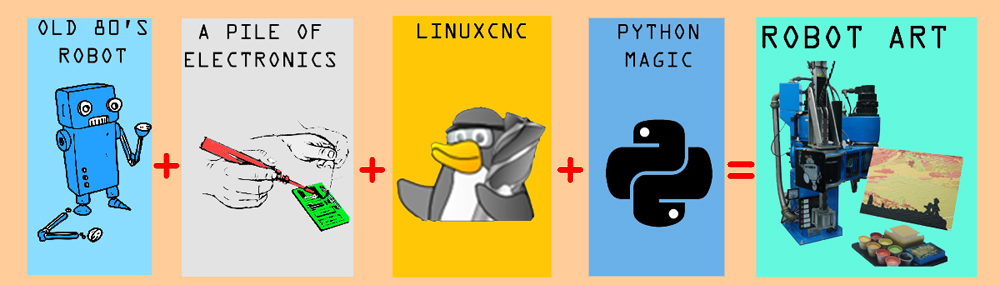
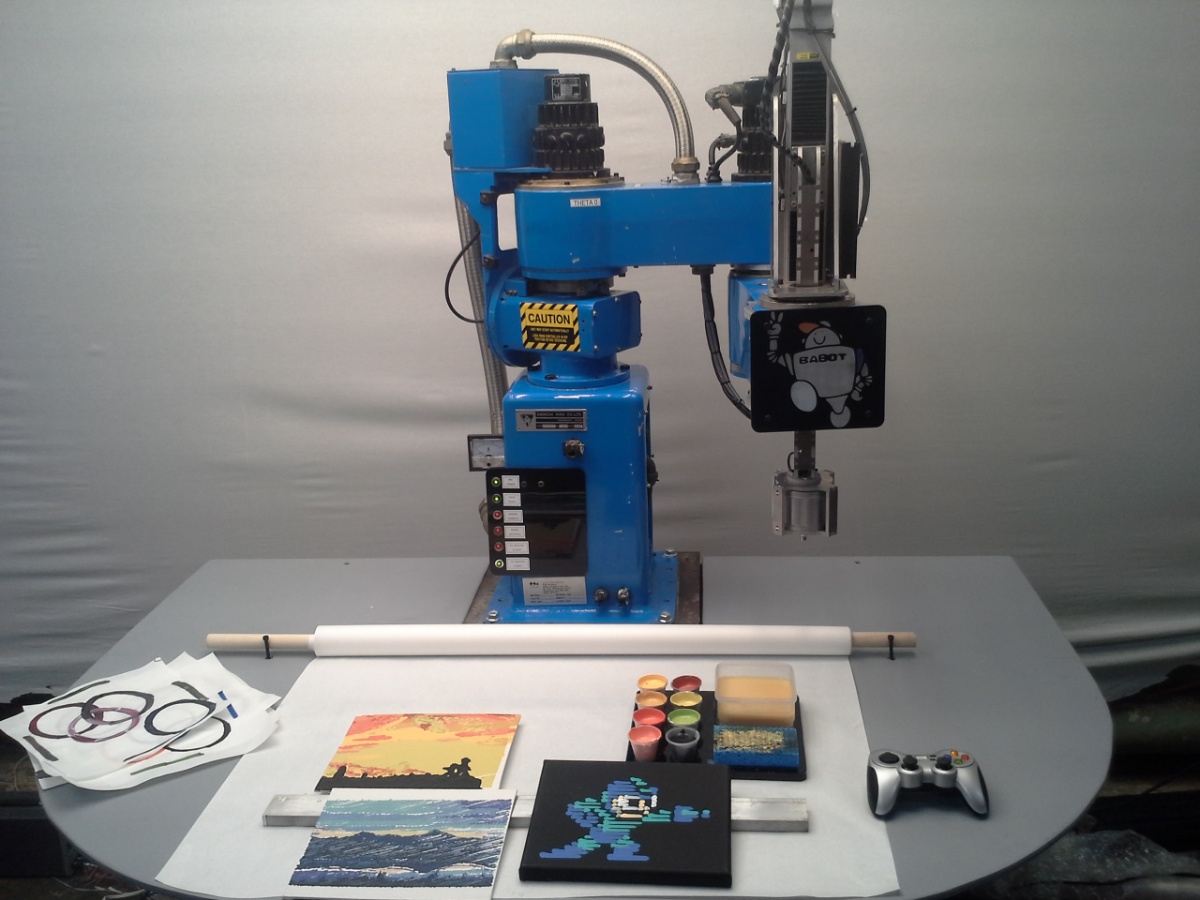
Painting is a useful benchmark for robot learning: the task is continuous, contact-rich, visually self-evaluating, and tolerant of stylistic error. Our group studies these properties on BLUEBOT, a SCARA-configuration industrial arm built around April 1983 and donated to the lab as non-functional surplus. Over roughly two months the machine was reverse engineered, refitted with modern control electronics and servo loops, and integrated with a LinuxCNC motion stack.
The resulting platform gives us a rigid, repeatable, human-scale canvas manipulator for a fraction of the cost of a modern collaborative arm — and a hardware substrate transparent enough that every layer, from encoder counts to stroke policy, is instrumentable.
Experimental Platform
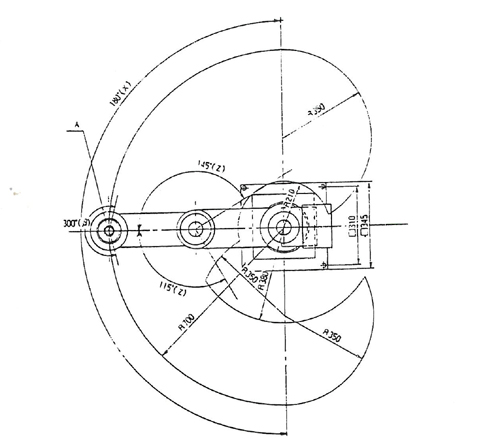
The arm is a three-theta SCARA: each rotary joint carries a brush-DC servo motor and a 500 count per revolution incremental encoder. No Z axis was present in the original configuration, so a vertical stage was designed and fabricated around a recovered Parker 402006 linear stage to provide brush lift and pressure authority.
| Parameter | Value | Note |
|---|---|---|
| Kinematics | SCARA, 3× revolute (θ₁–θ₃) + prismatic Z | Z axis added in-lab |
| Vintage | Dainichi Kiko PT-300H, ca. April 1983 | Distributed stateside via PAR Systems |
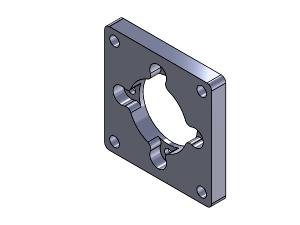
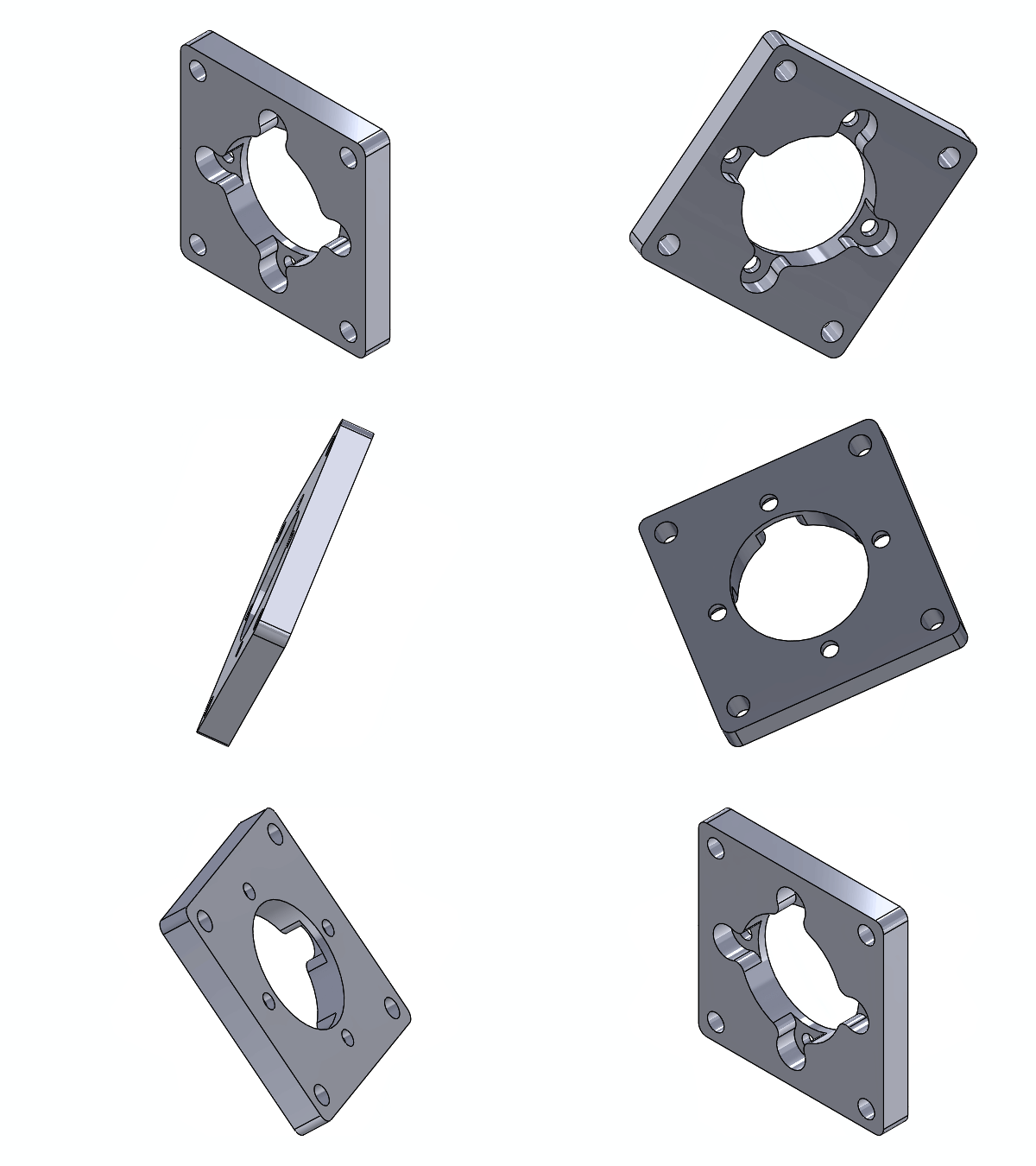
| Actuation | Brush-DC servos; NEMA 23 retrofit path | 3D-printed motor adapter |
| Feedback | 500 count/rev incremental encoders | Quadrature, per-axis |
| Motion control | LinuxCNC + custom servo loops | Step/dir and analog velocity modes |
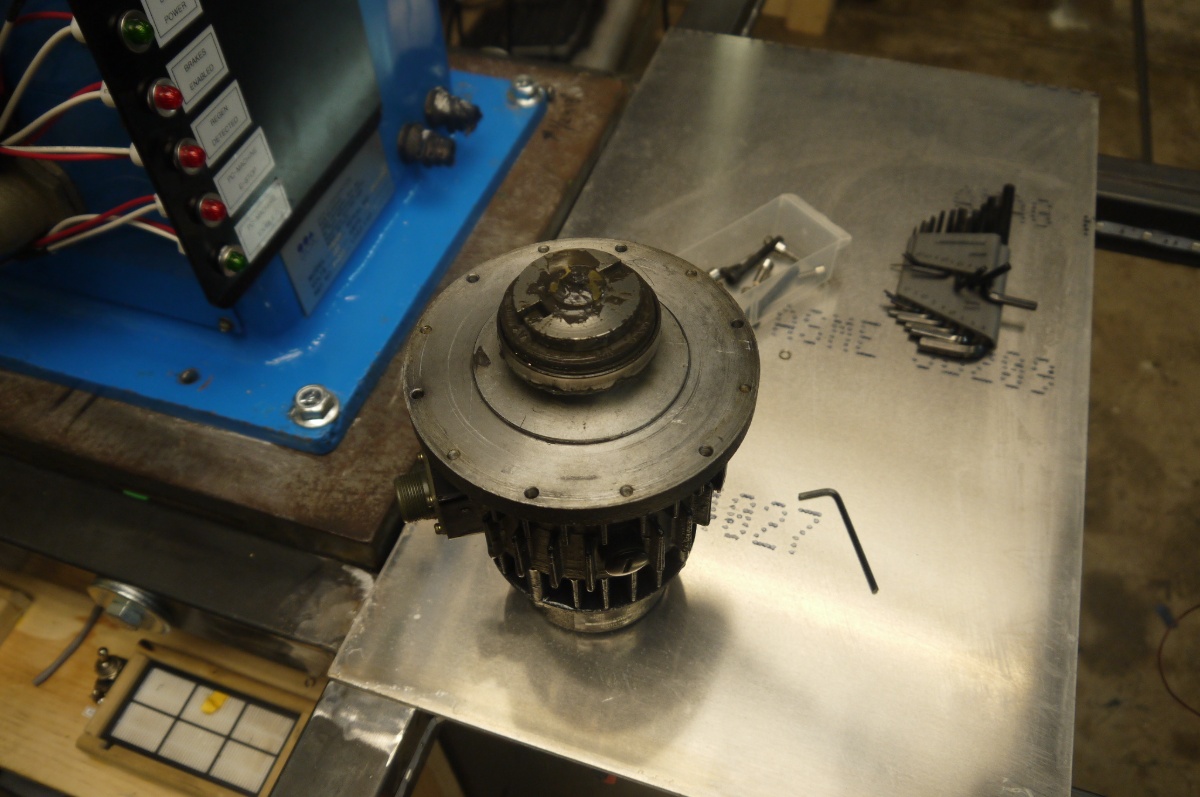
| Transmission | Harmonic reduction gearboxes | One unit rebuilt after wear failure |


Research Method
1 · Stroke primitive library
Human painters are recorded producing isolated strokes across brush types, loading conditions, and approach angles. Each stroke is parameterized by entry pose, pressure profile, velocity envelope, and release, forming a discrete primitive vocabulary the planner can sequence.
2 · Learning from visual outcome
An overhead camera closes the loop on the canvas rather than the joint space. The learner scores its own output against a target rendering, then updates the mapping from intended mark to commanded trajectory — absorbing brush compliance, paint rheology, and drying behavior that are impractical to model analytically.
3 · Hardware-in-the-loop constraint
Because the manipulator is a rigid legacy machine, its dynamic limits are fixed and well characterized. This makes it a useful adversary: policies must respect real acceleration ceilings and residual backlash, not idealized simulator dynamics.
Design position. Reclaiming decommissioned industrial hardware lowers the capital barrier to embodied-learning research. A donated 1983 arm plus open-source motion control reaches useful precision for expressive-motion studies at a small fraction of new-equipment cost.

Results
- Full closed-loop operation of all three theta axes restored, with a fabricated Z stage providing brush-pressure control.
- Multi-layer acrylic paintings completed autonomously from a target image, including palette pickup, stroke sequencing, and layer ordering.
- Platform submitted to the RobotArt painting competition in 2017 and 2018, providing an external, juried evaluation of output quality.
- Failure analysis of the harmonic transmission established the dominant error term in stroke placement, guiding the current rebuild.


Media
Recorded runs of the platform painting under autonomous control.
Data, CAD & Code
- Mechanical CAD — servo-to-NEMA 23 adapter, Z-axis mount, brush holder. STL / STEP
- Motion configuration — LinuxCNC
.ini/.halfiles, per-axis servo tuning. - Stroke dataset — demonstrated stroke primitives with synchronized joint and camera logs.
- Reference documentation — reconstructed PT-300H kinematic and electrical notes.
Primary build log and downloads: transistor-man.com/bluebot_revival.html
Selected Writing & Reports
-
Reviving an Ancient Robot for Art: Reverse Engineering a 1983 SCARA Manipulator
-
Harmonic Drive Wear as the Limiting Term in Robotic Stroke Placement
-
Retrofitting Legacy Brush-DC Servo Axes for Open-Source Motion Control
People & Acknowledgements
Dane Kouttron — Program Engineer, principal investigator on the BLUEBOT platform.
The manipulator was donated to the lab by MIT alumni, and its recovery, transport, and bring-up depended on volunteer collaborators who moved several hundred pounds of 1980s robotics out of a basement and into a working shop. We thank them.